declare(strict_types=1); namespace Sentry; use Psr\Log\LoggerInterface; use Sentry\HttpClient\HttpClientInterface; use Sentry\Integration\IntegrationInterface; use Sentry\Integration\OTLPIntegration; use Sentry\Logs\Logs; use Sentry\Metrics\Metrics; use Sentry\Metrics\TraceMetrics; use Sentry\State\Scope; use Sentry\Tracing\PropagationContext; use Sentry\Tracing\SpanContext; use Sentry\Tracing\Transaction; use Sentry\Tracing\TransactionContext; use Sentry\Transport\TransportInterface; /** * Creates a new Client and Hub which will be set as current. * * @param array{ * attach_metric_code_locations?: bool, * attach_stacktrace?: bool, * before_breadcrumb?: callable, * before_send?: callable, * before_send_check_in?: callable, * before_send_log?: callable, * before_send_transaction?: callable, * capture_silenced_errors?: bool, * context_lines?: int|null, * default_integrations?: bool, * dsn?: string|bool|Dsn|null, * enable_logs?: bool, * environment?: string|null, * error_types?: int|null, * http_client?: HttpClientInterface|null, * http_compression?: bool, * http_connect_timeout?: int|float, * http_proxy?: string|null, * http_proxy_authentication?: string|null, * http_ssl_verify_peer?: bool, * http_timeout?: int|float, * http_enable_curl_share_handle?: bool, * ignore_exceptions?: array, * ignore_transactions?: array, * in_app_exclude?: array, * in_app_include?: array, * integrations?: IntegrationInterface[]|callable(IntegrationInterface[]): IntegrationInterface[], * logger?: LoggerInterface|null, * log_flush_threshold?: int|null, * metric_flush_threshold?: int|null, * max_breadcrumbs?: int, * max_request_body_size?: "none"|"never"|"small"|"medium"|"always", * max_value_length?: int, * org_id?: int|null, * prefixes?: array, * profiles_sample_rate?: int|float|null, * profiles_sampler?: callable|null, * release?: string|null, * sample_rate?: float|int, * send_attempts?: int, * send_default_pii?: bool, * server_name?: string, * spotlight?: bool, * spotlight_url?: string, * strict_trace_continuation?: bool, * tags?: array, * trace_propagation_targets?: array|null, * traces_sample_rate?: float|int|null, * traces_sampler?: callable|null, * transport?: TransportInterface|null, * } $options The client options */ function init(array $options = []): void { $client = ClientBuilder::create($options)->getClient(); SentrySdk::init()->bindClient($client); } /** * Captures a message event and sends it to Sentry. * * @param string $message The message * @param Severity|null $level The severity level of the message * @param EventHint|null $hint Object that can contain additional information about the event */ function captureMessage(string $message, ?Severity $level = null, ?EventHint $hint = null): ?EventId { return SentrySdk::getCurrentHub()->captureMessage($message, $level, $hint); } /** * Captures an exception event and sends it to Sentry. * * @param \Throwable $exception The exception * @param EventHint|null $hint Object that can contain additional information about the event */ function captureException(\Throwable $exception, ?EventHint $hint = null): ?EventId { return SentrySdk::getCurrentHub()->captureException($exception, $hint); } /** * Captures a new event using the provided data. * * @param Event $event The event being captured * @param EventHint|null $hint May contain additional information about the event */ function captureEvent(Event $event, ?EventHint $hint = null): ?EventId { return SentrySdk::getCurrentHub()->captureEvent($event, $hint); } /** * Logs the most recent error (obtained with {@see error_get_last()}). * * @param EventHint|null $hint Object that can contain additional information about the event */ function captureLastError(?EventHint $hint = null): ?EventId { return SentrySdk::getCurrentHub()->captureLastError($hint); } /** * Captures a check-in and sends it to Sentry. * * @param string $slug Identifier of the Monitor * @param CheckInStatus $status The status of the check-in * @param int|float|null $duration The duration of the check-in * @param MonitorConfig|null $monitorConfig Configuration of the Monitor * @param string|null $checkInId A check-in ID from the previous check-in */ function captureCheckIn(string $slug, CheckInStatus $status, $duration = null, ?MonitorConfig $monitorConfig = null, ?string $checkInId = null): ?string { return SentrySdk::getCurrentHub()->captureCheckIn($slug, $status, $duration, $monitorConfig, $checkInId); } /** * Execute the given callable while wrapping it in a monitor check-in. * * @param string $slug Identifier of the Monitor * @param callable $callback The callable that is going to be monitored * @param MonitorConfig|null $monitorConfig Configuration of the Monitor * * @return mixed */ function withMonitor(string $slug, callable $callback, ?MonitorConfig $monitorConfig = null) { $checkInId = SentrySdk::getCurrentHub()->captureCheckIn($slug, CheckInStatus::inProgress(), null, $monitorConfig); $status = CheckInStatus::ok(); $duration = 0; try { $start = microtime(true); $result = $callback(); $duration = microtime(true) - $start; return $result; } catch (\Throwable $e) { $status = CheckInStatus::error(); throw $e; } finally { SentrySdk::getCurrentHub()->captureCheckIn($slug, $status, $duration, $monitorConfig, $checkInId); } } /** * Records a new breadcrumb which will be attached to future events. They * will be added to subsequent events to provide more context on user's * actions prior to an error or crash. * * @param Breadcrumb|string $category The category of the breadcrumb, can be a Breadcrumb instance as well (in which case the other parameters are ignored) * @param string|null $message Breadcrumb message * @param array $metadata Additional information about the breadcrumb * @param string $level The error level of the breadcrumb * @param string $type The type of the breadcrumb * @param float|null $timestamp Optional timestamp of the breadcrumb */ function addBreadcrumb($category, ?string $message = null, array $metadata = [], string $level = Breadcrumb::LEVEL_INFO, string $type = Breadcrumb::TYPE_DEFAULT, ?float $timestamp = null): void { SentrySdk::getCurrentHub()->addBreadcrumb( $category instanceof Breadcrumb ? $category : new Breadcrumb($level, $type, $category, $message, $metadata, $timestamp) ); } /** * Calls the given callback passing to it the current scope so that any * operation can be run within its context. * * @param callable $callback The callback to be executed */ function configureScope(callable $callback): void { SentrySdk::getCurrentHub()->configureScope($callback); } /** * Creates a new scope with and executes the given operation within. The scope * is automatically removed once the operation finishes or throws. * * @param callable $callback The callback to be executed * * @phpstan-template T * * @phpstan-param callable(Scope): T $callback * * @return mixed|void The callback's return value, upon successful execution * * @phpstan-return T */ function withScope(callable $callback) { return SentrySdk::getCurrentHub()->withScope($callback); } function startContext(): void { SentrySdk::startContext(); } function endContext(?int $timeout = null): void { SentrySdk::endContext($timeout); } /** * Executes the given callback within an isolated context. * * If a context is already active for the current execution key, it is reused. * * @param callable $callback The callback to execute * @param int|null $timeout The maximum number of seconds to wait while flushing the client transport * * @phpstan-template T * * @phpstan-param callable(): T $callback * * @return mixed * * @phpstan-return T */ function withContext(callable $callback, ?int $timeout = null) { return SentrySdk::withContext($callback, $timeout); } /** * Starts a new `Transaction` and returns it. This is the entry point to manual * tracing instrumentation. * * A tree structure can be built by adding child spans to the transaction, and * child spans to other spans. To start a new child span within the transaction * or any span, call the respective `startChild()` method. * * Every child span must be finished before the transaction is finished, * otherwise the unfinished spans are discarded. * * The transaction must be finished with a call to its `finish()` method, at * which point the transaction with all its finished child spans will be sent to * Sentry. * * @param TransactionContext $context Properties of the new transaction * @param array $customSamplingContext Additional context that will be passed to the {@see Tracing\SamplingContext} */ function startTransaction(TransactionContext $context, array $customSamplingContext = []): Transaction { return SentrySdk::getCurrentHub()->startTransaction($context, $customSamplingContext); } /** * Execute the given callable while wrapping it in a span added as a child to the current transaction and active span. * If there is no transaction active this is a no-op and the scope passed to the trace callable will be unused. * * @template T * * @param callable(Scope): T $trace The callable that is going to be traced * @param SpanContext $context The context of the span to be created * * @return T */ function trace(callable $trace, SpanContext $context) { return SentrySdk::getCurrentHub()->withScope(static function (Scope $scope) use ($context, $trace) { $parentSpan = $scope->getSpan(); $span = null; // If there is a span set on the scope and it's sampled there is an active transaction. // If that is the case we create the child span and set it on the scope. // Otherwise we only execute the callable without creating a span. if ($parentSpan !== null && $parentSpan->getSampled()) { $span = $parentSpan->startChild($context); $scope->setSpan($span); } try { return $trace($scope); } finally { if ($span !== null) { $span->finish(); $scope->setSpan($parentSpan); } } }); } /** * Returns the OTLP traces endpoint configured for the current client. */ function getOtlpTracesEndpointUrl(): ?string { $hub = SentrySdk::getCurrentHub(); $client = $hub->getClient(); if ($client === null) { return null; } $integration = $hub->getIntegration(OTLPIntegration::class); if ($integration instanceof OTLPIntegration && $integration->getCollectorUrl() !== null) { return $integration->getCollectorUrl(); } $dsn = $client->getOptions()->getDsn(); if ($dsn === null) { return null; } return $dsn->getOtlpTracesEndpointUrl(); } /** * Creates the current Sentry traceparent string, to be used as a HTTP header value * or HTML meta tag value. * This function is context aware, as in it either returns the traceparent based * on the current span, or the scope's propagation context. */ function getTraceparent(): string { $hub = SentrySdk::getCurrentHub(); $client = $hub->getClient(); if ($client !== null) { $options = $client->getOptions(); if ($options->isTracingEnabled()) { $span = SentrySdk::getCurrentHub()->getSpan(); if ($span !== null) { return $span->toTraceparent(); } } } $traceParent = ''; $hub->configureScope(static function (Scope $scope) use (&$traceParent) { if ($scope->hasExternalPropagationContext()) { return; } $traceParent = $scope->getPropagationContext()->toTraceparent(); }); return $traceParent; } /** * Creates the current W3C traceparent string, to be used as a HTTP header value * or HTML meta tag value. * This function is context aware, as in it either returns the traceparent based * on the current span, or the scope's propagation context. * * @deprecated since version 4.12. To be removed in version 5.0. */ function getW3CTraceparent(): string { return ''; } /** * Creates the baggage content string, to be used as a HTTP header value * or HTML meta tag value. * This function is context aware, as in it either returns the baggage based * on the current span or the scope's propagation context. */ function getBaggage(): string { $hub = SentrySdk::getCurrentHub(); $client = $hub->getClient(); if ($client !== null) { $options = $client->getOptions(); if ($options->isTracingEnabled()) { $span = SentrySdk::getCurrentHub()->getSpan(); if ($span !== null) { return $span->toBaggage(); } } } $baggage = ''; $hub->configureScope(static function (Scope $scope) use (&$baggage) { if ($scope->hasExternalPropagationContext()) { return; } $baggage = $scope->getPropagationContext()->toBaggage(); }); return $baggage; } /** * Continue a trace based on HTTP header values. * If the SDK is configured with enabled tracing, * this function returns a populated TransactionContext. * In any other cases, it populates the propagation context on the scope. */ function continueTrace(string $sentryTrace, string $baggage): TransactionContext { // With the new `strict_trace_continuation`, it's possible that we start two new // traces if we parse the TransactionContext and PropagationContext from the same // headers. To make sure the trace is the same, we will create one transaction // context from headers and copy relevant information over. $transactionContext = TransactionContext::fromHeaders($sentryTrace, $baggage); $propagationContext = PropagationContext::fromDefaults(); $metadata = $transactionContext->getMetadata(); $traceId = $transactionContext->getTraceId() ?? $propagationContext->getTraceId(); $transactionContext->setTraceId($traceId); $propagationContext->setTraceId($traceId); $propagationContext->setParentSpanId($transactionContext->getParentSpanId()); $propagationContext->setSampleRand($metadata->getSampleRand()); $dynamicSamplingContext = $metadata->getDynamicSamplingContext(); if ($dynamicSamplingContext !== null) { $propagationContext->setDynamicSamplingContext($dynamicSamplingContext); } $hub = SentrySdk::getCurrentHub(); $hub->configureScope(static function (Scope $scope) use ($propagationContext): void { $scope->setPropagationContext($propagationContext); }); return $transactionContext; } /** * Get the Sentry Logs client. */ function logger(): Logs { return Logs::getInstance(); } /** * @deprecated use `traceMetrics` instead */ function metrics(): Metrics { return Metrics::getInstance(); } function traceMetrics(): TraceMetrics { return TraceMetrics::getInstance(); } /** * @deprecated use `traceMetrics` instead */ function trace_metrics(): TraceMetrics { return TraceMetrics::getInstance(); } /** * Adds a feature flag evaluation to the current scope. * When invoked repeatedly for the same name, the most recent value is used. */ function addFeatureFlag(string $name, bool $result): void { SentrySdk::getCurrentHub()->configureScope(static function (Scope $scope) use ($name, $result) { $scope->addFeatureFlag($name, $result); }); } /** * Flushes all buffered telemetry data. * * This is a convenience facade that forwards the flush operation to all * internally managed components. * * Calling this method is equivalent to invoking `flush()` on each component * individually. It does not change flushing behavior, improve performance, * or reduce the number of network requests. */ function flush(): void { SentrySdk::flush(); } Junk Removal Service – Free Junk Removal Dubai

Junk Removal Services In Dubai

Discover the easiest way to declutter your space with the best junk removal services in Dubai. Whether you’re renovating, moving or just need to clear out unwanted items, our professional junk removal experts are here to help. Our junk removal services provide unparalleled convenience. Save yourself the hassle of dealing with bulky items, electronic waste, or construction debris. We handle the entire process from collection to disposal, allowing you to focus on what matters most to you.

 
Our Services

What Service We Offer

We take pride in offering the absolute best in junk removal services throughout Dubai. Our commitment to excellence, coupled with a customer-centric approach, ensures that your experience with us is seamless, efficient, and unparalleled. Discover why we stand out as the go-to choice for individuals, businesses, and construction projects in need of top-notch junk removal services.
 

Electronic Waste Removal

Dispose of electronic waste responsibly with our e-waste removal services. We ensure that old electronics are properly recycled or disposed of in compliance with environmental regulations. Choose a sustainable solution for your electronic waste.


Commercial Junk Removal

Streamline your business operations by letting us take care of the clutter. Our commercial junk removal services cater to offices, retail spaces, and businesses of all sizes. Create a productive work environment with our efficient removal solutions.
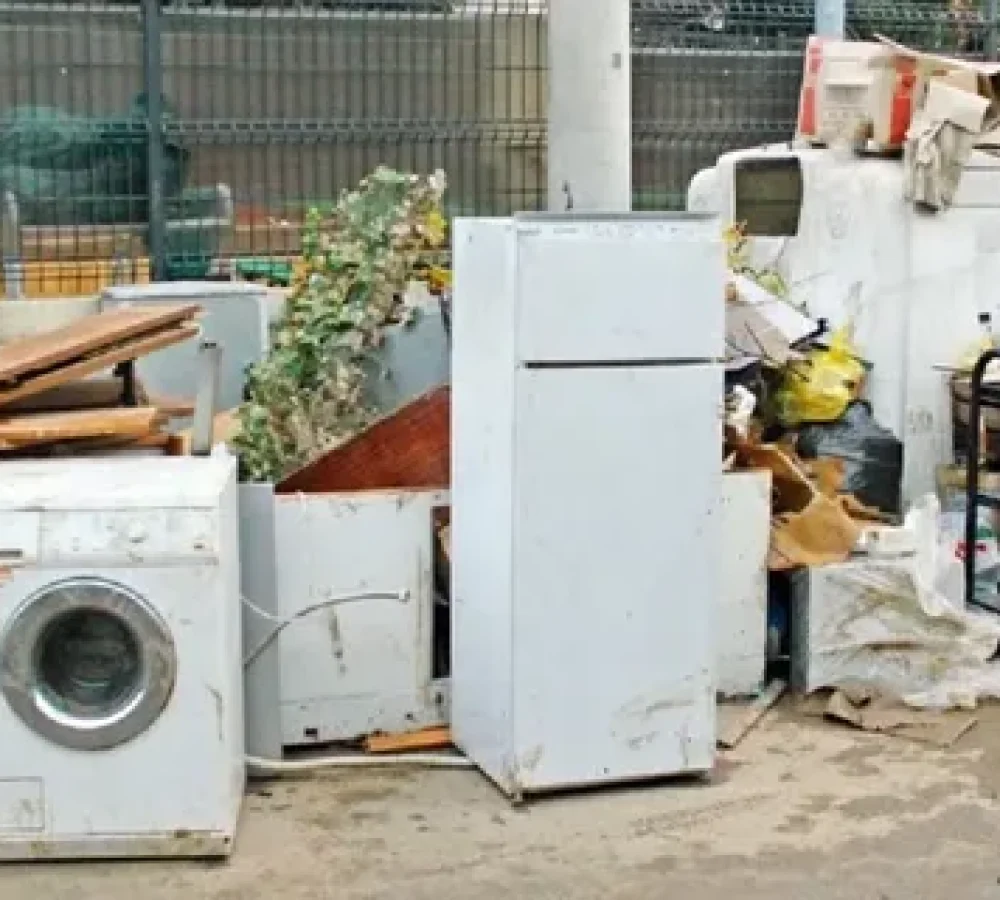

Appliance Removal

Upgrade your appliances without the hassle of disposing of the old ones. Our team efficiently removes and disposes of appliances, ensuring that the process is smooth and environmentally friendly.

Contact Info

Contact us today! to get rid of you junk appliances, electronics & furniture in Dubai.

Our Office

Dubai,UAE

Mail Us

info@freejunk-removal.com

Phone Number

+971 58 611 5093

0 k+
Satisfied Customer
0 k+
Completed Task
0 +
Years Of Experience
0 +
Professional Workers
WHY CHOOSE US

Streamlining Spaces with Junk Removal in Dubai

In a city that thrives on innovation and cutting-edge technology, ensuring a clutter-free and technologically advanced environment is a top priority. Our Junk Removal services in Dubai are designed to seamlessly integrate with the dynamic lifestyle of residents and businesses alike. Whether you’re upgrading your home entertainment system or renovating your office, our specialized team ensures the efficient and responsible removal of junk removal.


01.

Make An Appointment

Customers reach out to the junk removal company, either through phone, website, or app.

02.

Start Pickup

On the scheduled day, the junk removal team arrives with necessary equipment and vehicles.

03.

Recycling

We sort through items to determine what can be recycled or donated, reducing waste.

Scroll to Top
+971 58 611 5093